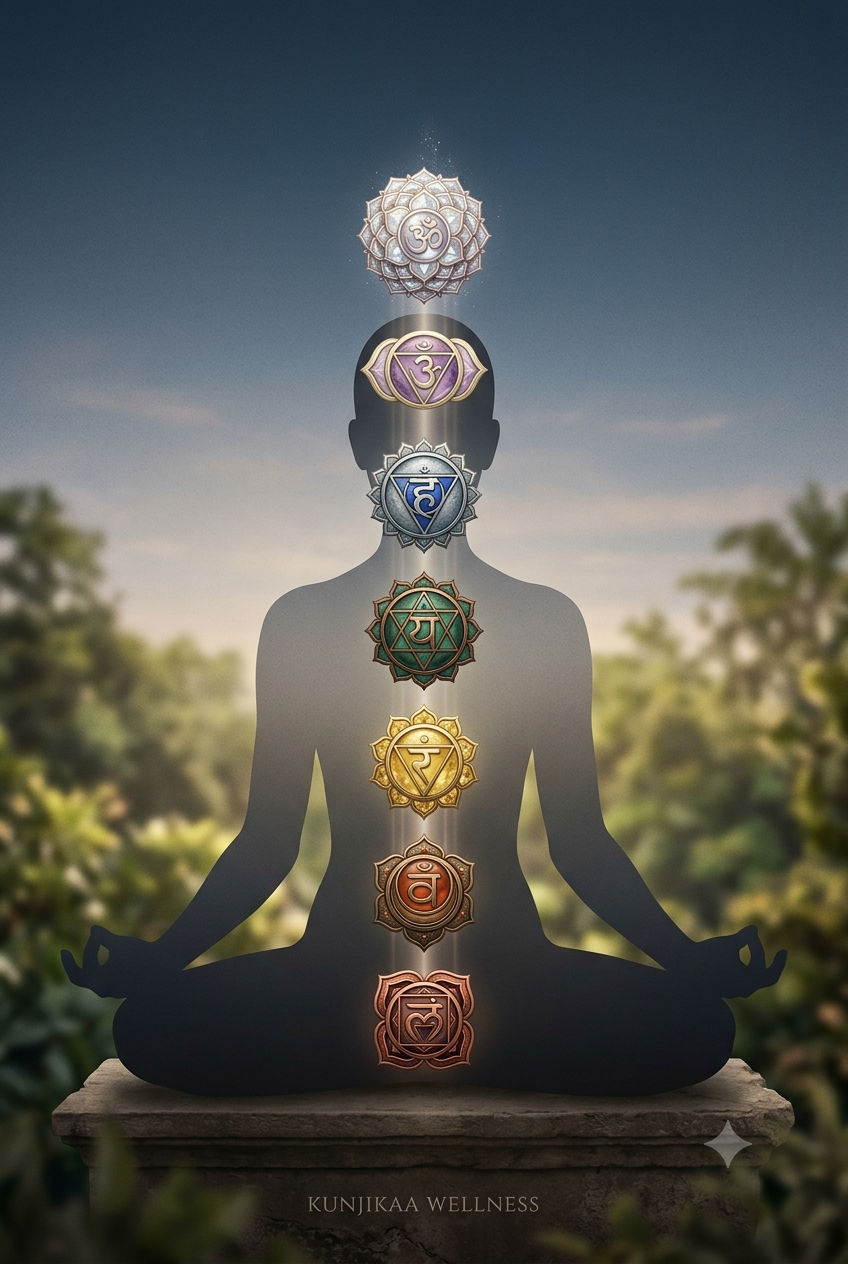
The 7 Chakras
Exploring the subtle energy centers within
What Are Chakras?
A map of inner awareness
The Sanskrit word chakra means “wheel” or “disc”, suggesting something that turns or moves.
In yogic traditions, chakras are described as subtle energy centers associated with different aspects of our physical, emotional and spiritual experience. They are traditionally located along the central axis of the body, from the base of the spine to the crown of the head.
More than seven points
The chakra system is closely connected with concepts such as prana, nadis, Kundalini Shakti, meditation and bija mantras.
Rather than thinking of the chakras simply as physical organs or anatomical structures, they can be explored as a traditional yogic way of observing our inner states and patterns.
The seven energy centers
Root Chakra
Grounding • Stability • Security
Located at the base of the body, Muladhara is traditionally associated with grounding, stability and our sense of security.
Heart Chakra
Love • Connection • Compassion
At the center of the chakra system, Anahata represents love, connection and our capacity to relate to ourselves and others.
Sacral Chakra
Creativity • Feeling • Pleasure
Svadhishthana is associated with emotions, creativity, pleasure and our relationship with the experience of self-worth.
Throat Chakra
Expression • Truth • Communication
Vishuddhi is associated with communication and the ability to express ourselves clearly and authentically.
Crown Chakra
Awareness • Spirituality • Higher Consciousness
At the crown of the head, Sahasrara represents the highest point of the chakra system and is traditionally associated with spiritual awareness and enlightenment.
Solar Plexus Chakra
Confidence • Will • Personal Power
Located around the navel region, Manipura is traditionally connected with personal power, confidence and inner strength.
Third Eye Chakra
Intuition • Insight • Awareness
Ajna, located between the eyebrows, is traditionally associated with intuition, concentration and the ability to see beyond the immediate.
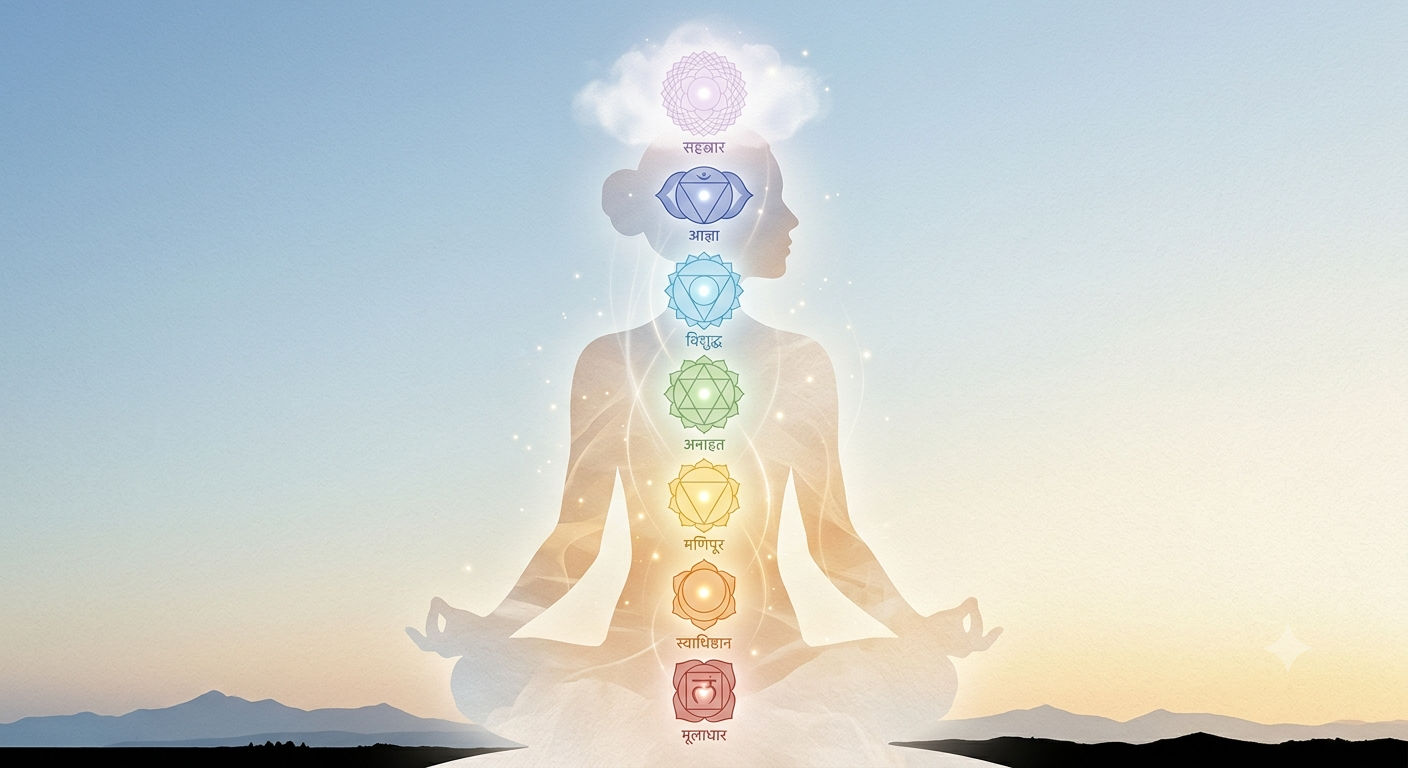
A journey through the chakras
The seven chakras can be experienced as a journey from grounding to expansion.
Muladhara invites us to feel grounded.
Svadhishthana opens us to feeling and creativity.
Manipura connects us with confidence and personal power.
Anahata brings us toward love and connection.
Vishuddhi invites authentic expression.
Ajna turns attention toward insight and intuition.
Sahasrara points toward expanded awareness and spiritual connection.
From the base of the body to the crown of the head — from stability to awareness.
Listening to our inner patterns
In traditional chakra teachings, each energy center is associated with particular qualities and patterns of experience.
At times, we may feel deeply grounded and secure. At other times, we may notice fear, emotional restlessness, difficulty expressing ourselves, lack of confidence or a feeling of disconnection.
The chakra system offers a contemplative framework for noticing these patterns and bringing greater awareness to them.
Rather than seeing a chakra as something that is simply “broken” or “blocked”, the practice can become an invitation to Listening to our inner patterns.
Pause & notice
- What am I feeling?
- Where am I holding tension?
- What feels difficult to express?
- Where do I need greater balance?
- What needs my awareness?
Each chakra has its own language
Colour
Traditional chakra systems associate each center with a particular colour, creating a visual language for the subtle body.
Sound
Chakras are traditionally connected with specific bija mantras — seed sounds used in yogic practices.
Mudra
Traditional hand gestures, or mudras, are used in yogic practices as a way of directing attention and cultivating an energetic or meditative state.
These practices are best explored as part of a guided yogic or meditative practice rather than simply as concepts to read about.
The journey begins within
The chakras offer more than a system to memorize.
They offer a way to become more attentive to the relationship between body, breath, emotions, thoughts and awareness.
Whether you approach them through meditation, yoga, pranayama or quiet self-reflection, the invitation remains simple:
- Become still.
- Become aware.
- Listen within.
Explore Your Inner Practice
Discover meditation, yoga and wellness practices at Kunjikaa Wellness.
Take Your Next Step 🌱
Reading about wellness is the beginning — now experience it.
Book a Session
Ready to experience personalised healing? Book a one-on-one consultation with our wellness experts.
View Services🗓️Join an Event
Connect with a community of like-minded seekers at our upcoming workshops, retreats, and live sessions.
Browse Events📚Enroll in a Course
Deepen your practice at your own pace with our structured online and in-person courses.
Explore Courses
Comments (0)
Please log in to leave a comment.
No comments yet. Be the first to comment!